

GlobalWoman · Find your way in the world
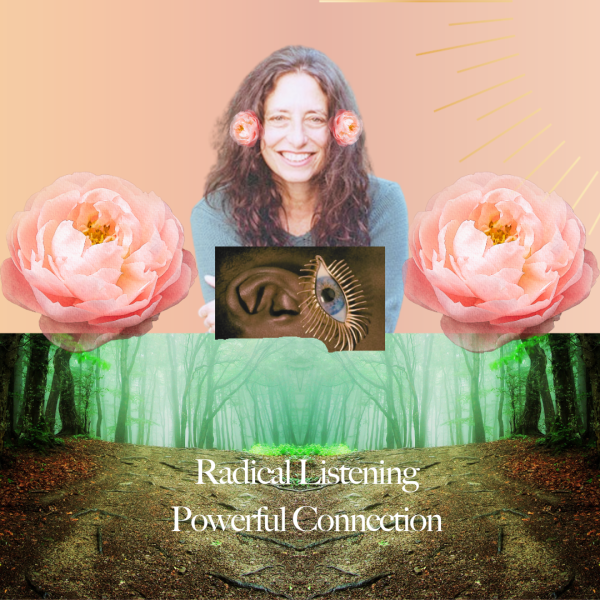
Radical listening, transforming connection
Somewhere between quick texts and half-listened conversations, the art of actually hearing someone got lost. Here’s how to find it again.
The lowdown
What is radical listening?
Radical listening means listening to understand rather than to reply: hearing what someone actually means, including what they find hard to say, without interrupting, fixing or judging. The psychologist Carol Gilligan uses the term for a kind of attention that lets a person’s true voice be heard, by others and by herself.
In a world of quick texts, fleeting posts and half-listened conversations, the art of truly connecting can feel almost lost. Radical listening is how we find it again.
Inspired by Gemini, the muse of communication and messages, we can find our way in the world by mastering not just how we speak, but how we hear.
This is what radical listening is actually for.
Not etiquette. Not being a good conversationalist.
It’s the practice that lets you locate yourself, because you only find your way by hearing the truth of where you actually are, not the version that’s easiest to say out loud.
The myth
Echo: the myth of the silenced voice
Greek myth told this story long before group chats existed. Echo was a mountain nymph known for her voice: talkative, quick, always ready with something to say. Hera cursed her for it, stripping away every word except the power to repeat whatever someone else had just said.
When Echo fell in love with Narcissus, she had nothing to offer him but his own words, handed back. He heard only himself. She was never heard at all. Echo faded until nothing remained but a voice that couldn’t say anything of its own.
A world where people only hear their own words reflected back,
and the person speaking disappears.
Echo’s real loss wasn’t just her voice. It was her direction. You can’t find your way using someone else’s words as your only compass. Radical listening reverses that: hear someone closely enough, including yourself, and a real path starts to become visible again.
The practice
How to practise radical listening
Five ways to listen like it matters.
Listen to understand, not to reply
Notice the moment you start preparing your answer. Put it down, and go back to listening.
Listen for the “I”
Pay attention to how a person speaks about herself: where she sounds sure, and where she goes quiet. That’s where her real voice lives.
Don’t fix it
Resist advice, reassurance and “at least”. Being heard is often the help.
Hear what isn’t said
Pauses, changes of subject, a laugh in the wrong place. The unsaid often matters most.
Listen to yourself
Radical listening starts inside. Give your own instincts the same patience you’d give a friend.
Nine questions. Nine muses. Find the one who is showing you the way.
The thinker
Radical listening and patriarchy
The psychologist Carol Gilligan has spent her career on voice, silencing and the ethics of care. Across her books, including In a Different Voice, Why Does Patriarchy Persist? (with Naomi Snider) and Darkness Now Visible (with David A. J. Richards), she shows how girls and women learn to silence what they know, and how listening can bring that knowing back.
“If patriarchy is an idealization of a past that requires silencing and lies, radical listening is the reckoning.”
Carol Gilligan, quoted in “Carefully Smash the Patriarchy”, The New York Times, 2019
Not politeness, but actual attention: the kind that lets a person find her own way instead of performing someone else’s script.
The problem
How silencing works, and what it costs
How voices disappear, and what it costs.
Silencing is the act of ignoring, dismissing or invalidating someone’s voice and experience. It is deeply rooted in patriarchal structures that have long marginalised women and minorities. And it doesn’t just hurt feelings: it cuts off the information a person needs to find her way. Lilith knew this better than anyone.
How it shows up
Interrupting and talking over
Cutting someone off tells her what she says matters less.
Dismissing
“You’re overreacting.” “It’s not a big deal.” Her experience, erased.
Ignoring
Her contribution, or her presence, goes unacknowledged.
Cultural silencing
Norms that favour some voices over others, built into the system.
What it costs
Trust
People stop sharing when they’re not heard.
Wellbeing
Being silenced over and over breeds frustration, anger and self-doubt.
Perspective
Every silenced voice is a view the group never gets to see.
Equality
Silence keeps power where it already is.
The way forward
Breaking the cycle of silencing
Each of these clears the same path: it lets a person find her way through her own experience, instead of being talked out of it.
Echo lost her voice because no one was really listening.
That’s the whole warning, and the whole invitation.
Listen deeply, and you build stronger, more meaningful connections, and a fairer world. That’s how you find your way in the world.
Find your way in the world. Find your voice.
Listen like it matters. Speak like you’ll be heard. Which muse is listening for you?